
Gluing vs Glueing: Which Spelling Is Correct in American English and Why It Matters
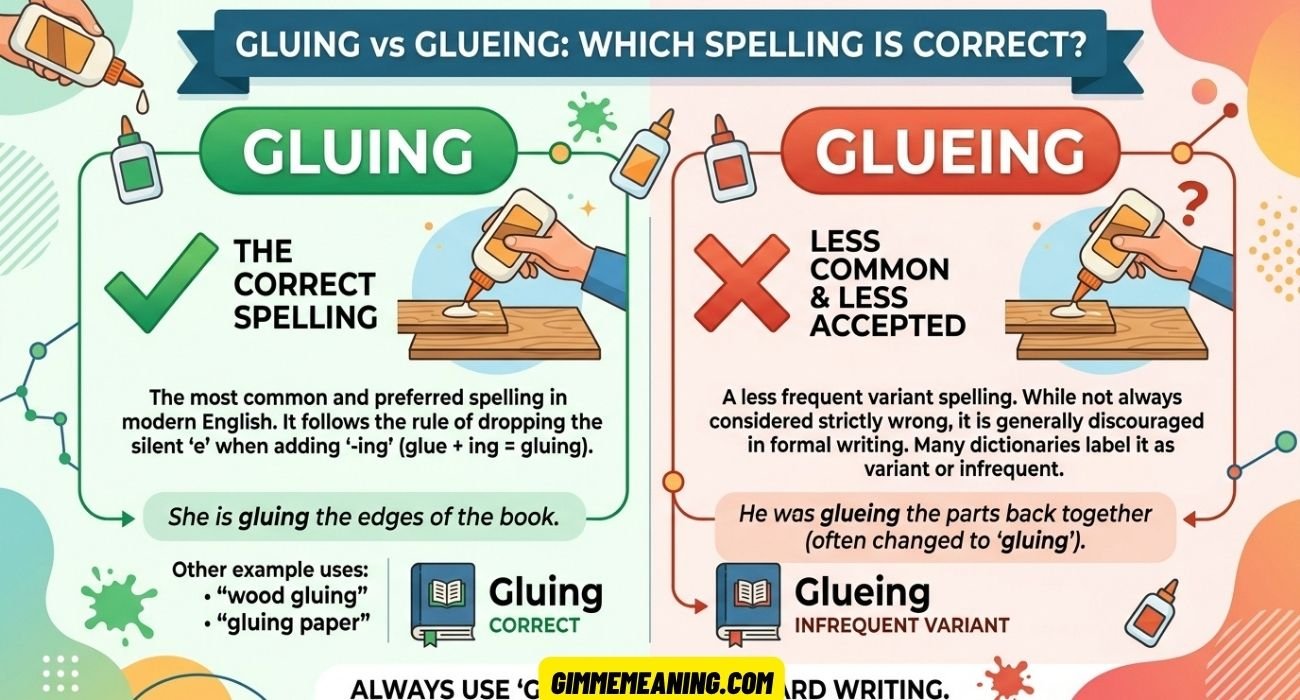
Gluing or Glueing refers to two spellings of the same word. It comes from the verb “glue,” which means to stick things together. The correct spelling is gluing in modern English. “Glueing” is not standard today.
Many students feel confused about Gluing or Glueing. The words look almost the same but only one is correct. This small mistake can affect your writing. Learning the right form makes your work better.
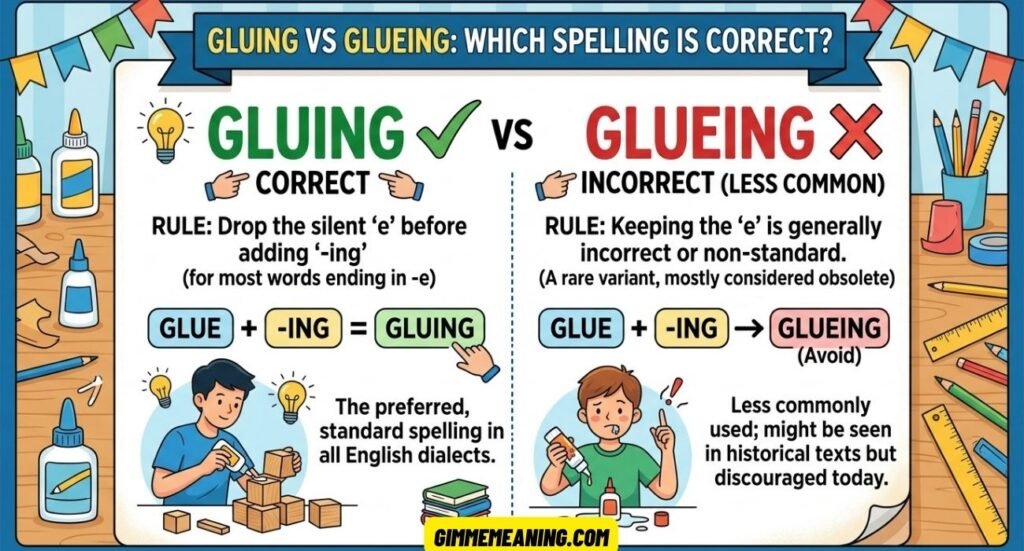
The spelling gluing follows a simple grammar rule. You drop the silent “e” and add “-ing.” This rule helps you with many other words too. Knowing this makes English easier to learn and use.
The Real Answer — Which Is Correct: Gluing or Glueing?

The correct spelling is “gluing.” In American English, this is the only standard and widely accepted form. If you are wondering about “gluing or glueing,” the answer is simple: always use gluing.
Many people ask, “is glueing a word?” Technically, it has appeared in older texts, but today it is considered incorrect or outdated in most cases. Modern dictionaries and writing tools strongly recommend gluing as the correct spelling of gluing.
This follows basic English spelling rules for verbs, especially when forming the present participle of glue. The difference may look small, but using the wrong form can make your writing appear less professional.
Quick Grammar Tip
To understand how to spell gluing, you need to learn one important rule: the silent e rule in English grammar. This rule explains that when a verb ends with a silent “e,” you usually drop the “e” before adding “-ing.”
This is part of the broader concept of adding ing to verbs ending in e, which is a key area in spelling rules for -ing words.
Here is a simple table to help you understand:
| Base Verb | Correct Form | Explanation |
| make | making | Drop silent e |
| write | writing | Drop silent e |
| glue | gluing | Drop silent e |
This rule is one of the most important grammar rules for writing correctly, especially for beginners and those following ESL spelling rules.
Why the Spelling Confusion Happens in the First Place
The confusion between gluing vs glueing happens mainly because of how the word “glue” looks. The “ue” ending can trick people into thinking the “e” must stay to keep the sound clear. This leads to spelling mistakes in English writing.
Another reason is the presence of exceptions in English. While most verbs follow the silent e rule in English grammar, some do not. This creates confusion and contributes to common grammar errors in writing.
Let’s look at a comparison:
| Verb | Correct -ing Form | Notes |
| argue | arguing | Drop e |
| love | loving | Drop e |
| glue | gluing | Drop e |
| agree | agreeing | Keep e (exception) |
These examples show how examples of verbs ending in e can behave differently. This is why learners often struggle with spelling variations in English and linguistic variation in spelling.
Gluing vs Glueing: Is One More British or American?
Many people believe that glueing vs gluing UK vs US is a regional difference, similar to American vs British spelling differences like “color” and “colour.” However, this is not true in this case.
Both American and British English prefer gluing. While “glueing” may appear occasionally, it is not standard in modern usage. This makes it different from other spelling variations in English.
So if you are writing for a US audience, always choose gluing to ensure correct English usage and maintain grammar correctness in writing.
Historical Usage and Etymology of ‘Gluing’
The word “glue” comes from Old French and Latin roots meaning a sticky substance. Over time, English developed consistent patterns for forming verb endings. Early writers sometimes used both “gluing” and “glueing,” but as English orthography rules became more standardized, “gluing” became dominant.
This change reflects how language evolves. The shift also shows how linguistic variation in spelling becomes more stable over time, especially in formal writing.
What Does ‘Gluing’ Actually Mean?
The gluing meaning is simple but versatile. It refers to the act of sticking or bonding things together using an adhesive. It is also used figuratively to describe bringing people or ideas together.
Here is a table to explain both meanings clearly:
| Type | Meaning | Example |
| Literal | Sticking objects together | He is gluing paper pieces |
| Figurative | Connecting ideas or people | The leader is gluing the team together |
Understanding the meaning helps you use the word correctly in different contexts, improving your correct English usage.
When and Where You’ll See ‘Gluing’ in Real Life
In everyday life, “gluing” appears in many situations, especially in the United States. It is common in schools, DIY projects, and industries like manufacturing and technology. For example, in software development, “glue code” refers to code that connects different systems.
These real-life uses show how language connects to practical activities. Learning such terms also supports English grammar tips and tricks how to improve spelling in English, because you see how words are used naturally.
Examples of correct usage:
Understanding correct usage is important for avoiding correct vs incorrect spelling examples. Here are some sentences that demonstrate proper use of “gluing”:
He is gluing the broken parts carefully so they fit perfectly.
She is gluing labels onto products in the factory.
The developer is gluing different modules together using simple code.
These examples show how the word works in different contexts and reinforce proper verb forms in English grammar.
See Also : Happy Holiday or Happy Holidays? Exploring the Difference
Why ‘Glueing’ Is Not Standard — and Could Hurt Your Writing

Using “glueing” instead of “gluing” can create problems in professional and academic writing. It is often flagged as an error by spellcheck tools, which can reduce your credibility.
This mistake falls under common English spelling mistakes and can affect how readers view your work. In formal writing, following grammar rules for writing correctly is essential.
Incorrect spelling can also distract readers and make your writing harder to understand. That is why mastering small details like this is important for strong communication.
Memory Tricks: How to Always Spell ‘Gluing’ Correctly
To remember the correct spelling, focus on the rule: drop the “e” before adding “-ing.” This is one of the most useful grammar tips for students.
Think of this simple idea: “If the e is silent, let it go.” This trick works for many verbs and helps you avoid confusion.
Here is a helpful comparison:
| Base Word | Correct Form |
| bake | baking |
| move | moving |
| glue | gluing |
Practicing these patterns will improve your understanding of ESL spelling rules and reduce errors.
Common Misspellings and Similar Mistakes to Avoid
The mistake “glueing” is not the only one learners make. Many similar errors happen because people forget the silent e rule in English grammar.
Here is a table of common grammar errors in writing:
| Incorrect | Correct | Reason |
| glueing | gluing | Drop silent e |
| argueing | arguing | Drop silent e |
| changeing | changing | Drop silent e |
These examples highlight how important it is to follow spelling rules for -ing words and avoid spelling mistakes in English writing.
Why “Gluing” Is the Correct Spelling in Modern English
The debate around gluing vs glueing often confuses learners, but modern English clearly favors “gluing.” This follows standard English spelling rules for verbs, where the silent “e” is dropped before adding “-ing.” Understanding this pattern helps ensure correct English usage in both academic and professional writing.
Many people still ask is glueing a word, but in today’s usage, it is considered outdated or incorrect. Using the correct spelling improves grammar correctness in writing and prevents common English spelling mistakes that may affect clarity and credibility.
Understanding the Silent “E” Rule in Simple Terms

The silent e rule in English grammar explains why “gluing” is correct. When a verb ends in a silent “e,” you remove it before adding “-ing.” This rule is essential when learning adding ing to verbs ending in e, especially for beginners.
For example, verbs like “make” become “making,” and “write” becomes “writing.” These examples of verbs ending in e show consistent patterns. Learning this rule reduces spelling mistakes in English writing and improves overall language accuracy.
See Also : Deepest Sympathy Meaning, Usage, and Examples (Complete Guide)
Common Reasons Behind Spelling Confusion
One major reason for confusion in gluing or glueing is the unusual “ue” ending in “glue.” It makes learners think the “e” should stay, leading to errors. This misunderstanding is part of broader spelling variations in English that challenge learners.
Another reason is the presence of exceptions in English grammar. These irregular patterns create common grammar errors in writing, especially for ESL learners. Understanding patterns and exceptions helps improve how to spell gluing correctly every time.
American vs British Usage of Gluing
Many assume glueing vs gluing UK vs US is a regional difference, like other American vs British spelling differences. However, both regions prefer “gluing” as the standard spelling in modern usage.
Although “glueing” may appear in older British texts, it is not commonly accepted today. Using “gluing” ensures grammar correctness in writing and aligns with global standards of correct vs incorrect spelling examples.
The Meaning and Usage of “Gluing”
The gluing meaning refers to sticking or bonding materials together using adhesive. It is also used figuratively to describe connecting ideas or people, making it a flexible word in everyday English.
Understanding the present participle of glue helps in forming correct sentences. It also strengthens your knowledge of verb forms in English grammar, making your writing more natural and accurate in different contexts.
Real-Life Situations Where “Gluing” Is Used
You will often see “gluing” used in schools, offices, and industries. From craft projects to manufacturing, the word appears in many real-life situations, making it important for practical communication.
In technology, the term “glue code” is used to describe connecting systems. Learning such uses improves English grammar tips and tricks how to improve spelling in English and helps avoid common English spelling mistakes.
See Also : Hassle or Hastle? Which Is Correct? (Complete Guide with Meaning
Why Using “Glueing” Can Harm Your Writing
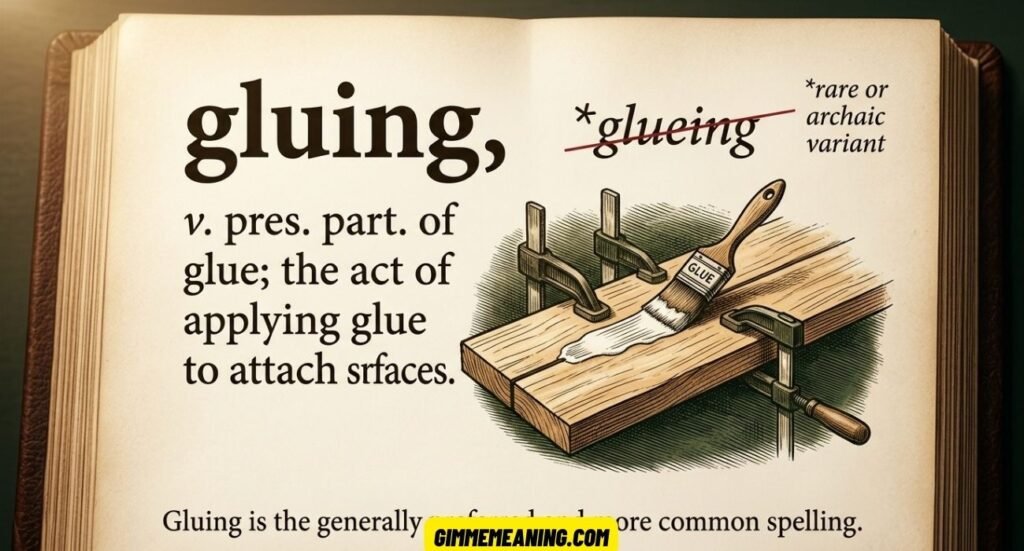
Using “glueing” instead of “gluing” can reduce the quality of your writing. It may be flagged by spellcheck tools and seen as incorrect, affecting your credibility and professionalism.
This mistake falls under spelling mistakes in English writing and shows a lack of understanding of English orthography rules. Correct spelling is essential for clear communication and strong writing skills.
Tips to Remember the Correct Spelling Easily
To remember how to spell gluing, focus on the rule: drop the silent “e.” This simple idea applies to many verbs and helps avoid confusion in writing.
Practicing patterns and reviewing grammar tips for students can improve your skills over time. Following ESL spelling rules and understanding spelling rules for -ing words will make your writing more accurate and confident.
FAQs
How do you spell glueing or gluing?
The correct spelling is gluing, not glueing. It follows the rule of dropping the silent “e” before adding “-ing.”
What is the meaning of glueing?
“Glueing” is a misspelling of gluing, which means sticking or joining things together with adhesive. It can also describe connecting ideas or people.
How do you spell glue with ing?
You spell it gluing, by removing the silent “e” from “glue” and adding “-ing.” This follows standard English spelling rules.
How is nighttime spelt?
Both nighttime and night time are correct, but nighttime (one word) is more commonly used in American English.
Conclusion
We explained the difference between Gluing or Glueing in a simple way. The correct spelling is gluing, and it follows a clear rule in English. When a verb ends with a silent “e,” you remove the “e” and add “-ing.” This rule helps you write correctly and avoid mistakes. Learning this rule also improves your spelling skills and builds confidence in writing.
Understanding Gluing or Glueing helps you become a better writer. You can use the correct form in schoolwork, exams, and daily writing. Good spelling shows care and attention to detail. It also makes your writing clear and easy to read. By practicing simple rules like this, you can improve your English step by step and achieve better results.