
Goodmorning or Good Morning: Which Is Correct?
Goodmorning or Good Morning is a common English phrase used to greet someone at the start of the day. The correct form is good morning, written as two words. It follows simple grammar rules where “good” describes the time of day.
Many people feel confused when they write Goodmorning or Good Morning. They often see both forms online and do not know which one is right. This small mistake can affect clear and correct writing.
Learning about Goodmorning or Good Morning helps you write better every day. It is useful in school, emails, and daily messages. Using the correct form shows good grammar and strong English skills.
Goodmorning or Good Morning – Quick Answer

The simple and correct answer is that good morning is always written as two separate words. The version goodmorning is incorrect and considered one of the most common common spelling mistakes in English.
The reason behind this is that the phrase combines an adjective and a noun. The word “good” describes the word “morning,” so they remain separate. This structure follows basic English vocabulary basics and helps maintain clarity in communication.
Here is a quick comparison table:
| Phrase | Correctness | Usage Level |
| Good morning | Correct | Very High |
| Goodmorning | Incorrect | Very Low |
If you ever ask yourself is goodmorning correct, the answer is always no. Using the correct form ensures you follow proper English usage and avoid errors in both formal and informal writing.
The Origin of Good Morning
The phrase “good morning” has a long history that dates back to the 14th century. It was used as a polite way to wish someone well at the beginning of the day. Over time, it became one of the most common greeting phrases in English.
The reason it stayed as two words is tied to its meaning. The phrase is descriptive rather than fixed. It refers to a specific time of day, which is why it did not merge into a single word. This explains the difference between good morning vs good night, where “goodnight” became a single word because it functions as a farewell rather than a time-based greeting.
A simple linguistic fact helps explain this clearly:
| Phrase | Function | Form |
| Good morning | Greeting | Two words |
| Good night | Farewell | One word |
This historical development shows how English grammar rules evolve based on usage and meaning rather than strict logic.
British English vs American English Spelling
Many learners wonder if there is a difference between British and American English when it comes to this phrase. The answer is simple: there is no difference. Both versions use good morning spelling as two separate words.
While there are many differences between British and American English, such as spelling variations in words like color and colour, this greeting remains the same across all regions.
Here is a comparison table:
| Word Type | British English | American English |
| Greeting | Good morning | Good morning |
| Color/Colour | Colour | Color |
| Favorite | Favourite | Favorite |
This consistency makes it easier for writers because you do not need to adjust your usage based on location. Whether you are writing for a U.S. audience or a global audience, good morning or goodmorning has only one correct form.
Which Spelling Should You Use?
If you are writing for a U.S. audience, the rule is very clear. You should always use good morning as two words in every situation. This applies to emails, workplace communication, school assignments, and even casual messages.
In professional settings, using the correct greeting is part of writing professionally. It shows respect and clarity. For example, using good morning in email is considered polite and appropriate in business communication.
A simple rule to remember is this:
Always write “good morning” as two words, no matter the context.
This rule applies in both formal vs informal writing, which makes it easy to follow. Whether you are sending a quick message or drafting an official email, using the correct form ensures you follow English writing tips and maintain professionalism.
Common Mistakes with Good Morning
Many people make mistakes when using this phrase, especially when typing quickly. These errors often happen because of habit or lack of awareness of English grammar rules.
One of the most common errors is writing goodmorning as a single word. Another frequent mistake is incorrect capitalization, such as writing “good Morning” instead of “Good morning.”
Understanding capitalization rules is important here. You should capitalize “Good” at the beginning of a sentence or greeting, but “morning” should remain lowercase unless it starts a sentence.
Another mistake is using the phrase at the wrong time of day. Knowing when to use good morning is important. It is typically used from early morning until around noon. After that, phrases like good afternoon or good evening are more appropriate.
These errors fall under broader categories of common spelling mistakes and incorrect usage of polite expressions in English.
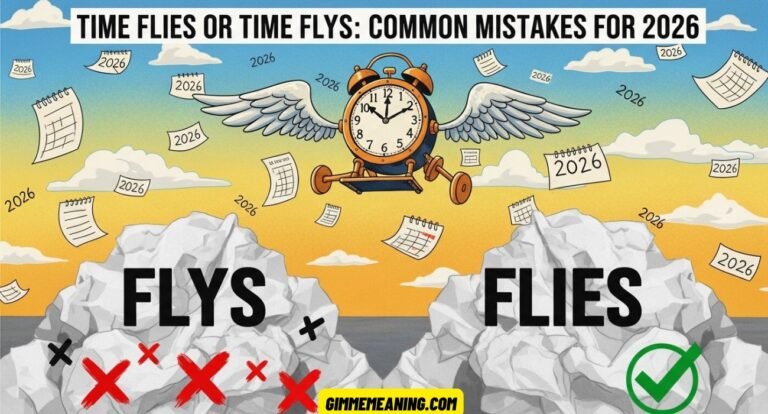
See Also : Time Flies or Time Flys: Common Mistakes For 2026
Good Morning in Everyday Examples
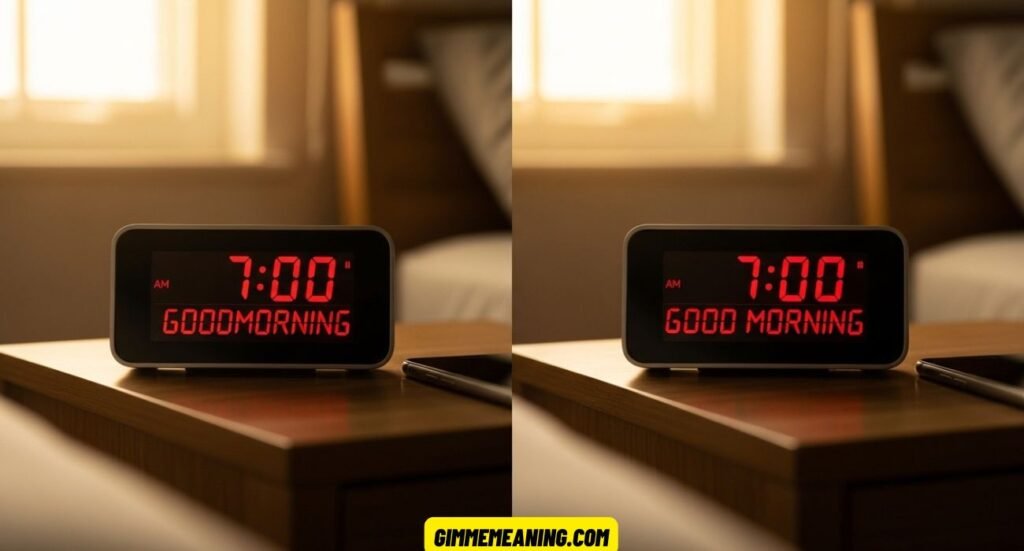
Using the phrase correctly in real-life situations helps reinforce understanding. Below are several good morning examples that show how it is used in different contexts.
In professional communication, a sentence like “Good morning, team. Let’s begin the meeting” is clear and polite. In emails, a common example is “Good morning, John. I hope you are doing well.” These are excellent examples of good morning in email and show how greetings set a respectful tone.
In casual settings, people often write messages like “Good morning everyone” on social media. This is part of everyday daily English phrases and reflects friendly communication.
In formal writing or speeches, someone might say, “He began his speech with a polite ‘Good morning.’” These are strong English greeting examples that demonstrate correct usage.
Here is a simple table showing usage:
| Context | Example Sentence |
| Professional | Good morning, team. |
| Good morning, Sarah. | |
| Casual | Good morning everyone! |
| Formal Speech | Good morning, ladies and gentlemen. |
These examples also help learners understand how to write good morning correctly in different situations.
Good Morning – Google Trends & Usage Data
Search data shows that good morning is used far more often than goodmorning. In the United States, millions of users search for phrases like good morning or goodmorning and is goodmorning correct every month.
Google Trends data highlights that the correct version dominates usage across all English-speaking countries. The incorrect version appears mostly in informal posts or typing errors.
Here is a comparison:
| Variation | Popularity | Accuracy |
| Good morning | Very High | Correct |
| Goodmorning | Low | Incorrect |
This data confirms that using the correct form is essential for clear communication and aligns with proper English usage.
Good Morning Capitalization Rules
Understanding capitalization rules helps you use the phrase correctly in all contexts. In most cases, only the first word is capitalized when it starts a sentence or greeting.
For example, “Good morning” is correct at the beginning of a sentence, while “good morning” can be used within a sentence. However, “Good Morning” with both words capitalized is typically reserved for titles or headings.
These rules are important for maintaining clarity in formal vs informal writing and improving overall English writing tips.
See Also : Vender vs Vendor: Which is Correct in 2026? (Complete US Guide)
Good Morning vs Good Night – Key Difference
The difference between good morning vs good night is an important concept in greeting words in English. “Good morning” is used as a greeting at the start of the day, while “good night” is used as a farewell before sleep.
Interestingly, “goodnight” is written as one word because it has evolved into a fixed expression. This highlights how English develops over time and explains why some phrases merge while others do not.
Understanding this difference helps improve your use of greeting phrases in English and avoids confusion in communication.
Understanding Good Morning or Goodmorning
The phrase good morning or goodmorning often creates confusion for many learners and writers. People see both versions online and assume they might be interchangeable. However, understanding the correct spelling of good morning is important for clear communication. This confusion is common because greetings are used daily in both personal and professional writing.
In reality, good morning vs goodmorning has only one correct answer. The two-word form follows basic English grammar rules, where “good” is an adjective and “morning” is a noun. Keeping them separate ensures proper English usage and helps avoid common spelling mistakes in everyday writing.
Why Good Morning Is Always Two Words
The structure of good morning spelling is based on how English forms descriptive phrases. Since “good” describes the time of day, it does not merge into one word. This is why writers must always use the correct form, especially when focusing on writing professionally or communicating clearly.
Many learners ask is goodmorning correct, but the answer is always no. Following English vocabulary basics helps you understand why the phrase stays separate. It is not just a rule to memorize but a pattern that appears in many greeting phrases in English.
The Role of Greetings in English Communication
Greetings play a major role in daily communication and are considered essential polite expressions in English. Using the correct greeting sets the tone for conversations, whether formal or informal. This is why learning correct greeting in English is important for students, professionals, and writers alike.
In many situations, using daily English phrases like “good morning” helps build positive relationships. These greetings are part of basic communication skills and are often the first thing people notice. That is why understanding proper English usage is key to effective interaction.
Good Morning in Professional and Casual Writing
Using good morning in email is common in workplaces across the United States. It shows respect and professionalism when starting a message. In business settings, this greeting helps create a positive impression and follows accepted formal vs informal writing standards.
In casual situations, a good morning greeting message is often used in texts or social media posts. While the tone may change, the spelling remains the same. This consistency is important for maintaining clarity and avoiding common spelling mistakes in all types of writing.
See Also : Thumb In or Thumb Out: 2026 Guide
Capitalization Rules for Good Morning
Understanding capitalization rules is essential when using greetings correctly. “Good morning” should have the first word capitalized at the beginning of a sentence, while “morning” remains lowercase unless it starts a sentence. This follows standard English grammar rules.
Writers often make mistakes by capitalizing both words unnecessarily. Learning English writing tips helps avoid such errors and improves clarity. Correct capitalization also enhances readability, especially in professional documents and formal communication.
Good Morning vs Good Night Differences
The comparison between good morning vs good night helps explain how English phrases evolve. “Good morning” is a greeting used at the start of the day, while “good night” is often a farewell said before sleep. This difference affects how each phrase is written.
Interestingly, “goodnight” is commonly written as one word, while “good morning” remains two words. This distinction highlights patterns in greeting words in English and helps learners understand how meaning influences structure in the language.
Examples of Good Morning in Daily Use
Looking at good morning examples helps learners understand how the phrase works in real situations. For instance, saying “Good morning, team” in a meeting is a professional way to begin communication. These are useful English greeting examples for everyday use.
Similarly, good morning sentence examples can be seen in emails, messages, and speeches. Learning how to write good morning correctly ensures that your communication is clear and polite. This is especially important in both academic and professional environments.
When to Use Good Morning Correctly
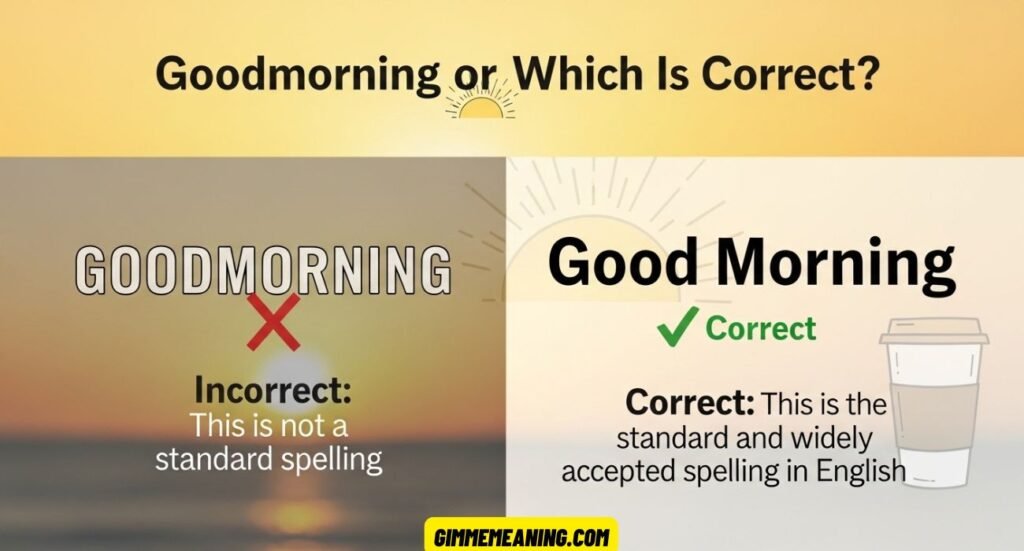
Knowing when to use good morning is just as important as spelling it correctly. This greeting is typically used from early morning until noon. After that, people switch to phrases like good afternoon or good evening based on the time of day.
Understanding good afternoon and good evening usage helps improve your overall communication skills. These expressions are part of standard greeting phrases in English, and using them correctly shows awareness of time, context, and proper etiquette in conversations.
FAQs
Is it good morning or Goodmorning?
The correct form is good morning, written as two words.
Goodmorning is incorrect and should not be used.
Can good morning be one word?
No, good morning cannot be written as one word.
It must always be written as two separate words.
Do I capitalize the m in Good morning?
No, only “Good” is capitalized at the beginning.
“morning” remains lowercase unless it starts a sentence.
Is it goodmorning or good morning in an email?
Always write good morning in emails.
Goodmorning is incorrect and unprofessional.
Conclusion
Goodmorning or Good Morning is simple when you follow basic rules. You should always write good morning as two separate words. This form follows clear grammar rules and helps you write correctly in school and daily life. When you use the right spelling, your writing looks neat and professional. It also helps others understand your message easily. Learning small rules like this builds strong writing habits and improves your confidence in English.
Using Goodmorning or Good Morning correctly also helps you communicate politely with others. You can use “good morning” in emails, messages, and conversations every day. It shows respect and good manners. When you practice correct spelling, you avoid common mistakes and become a better writer. Simple habits like this make a big difference over time and help you succeed in both school and future work.