Deepest Sympathy Meaning, Usage, and Examples (Complete Guide)
The Deepest Sympathy Meaning is about showing strong care and sadness for someone’s loss. It means you understand their pain and want to support them. It uses simple and kind words to express true feelings.
Many people struggle to find the right words during loss. They worry about saying something wrong or hurtful. Learning the Deepest Sympathy Meaning helps you speak with care and confidence.
The Deepest Sympathy Meaning is used in messages, cards, and conversations. It helps people feel supported during grief and sorrow. Simple and sincere words can bring comfort and build emotional connection.
What Does “Deepest Sympathy” Really Mean?

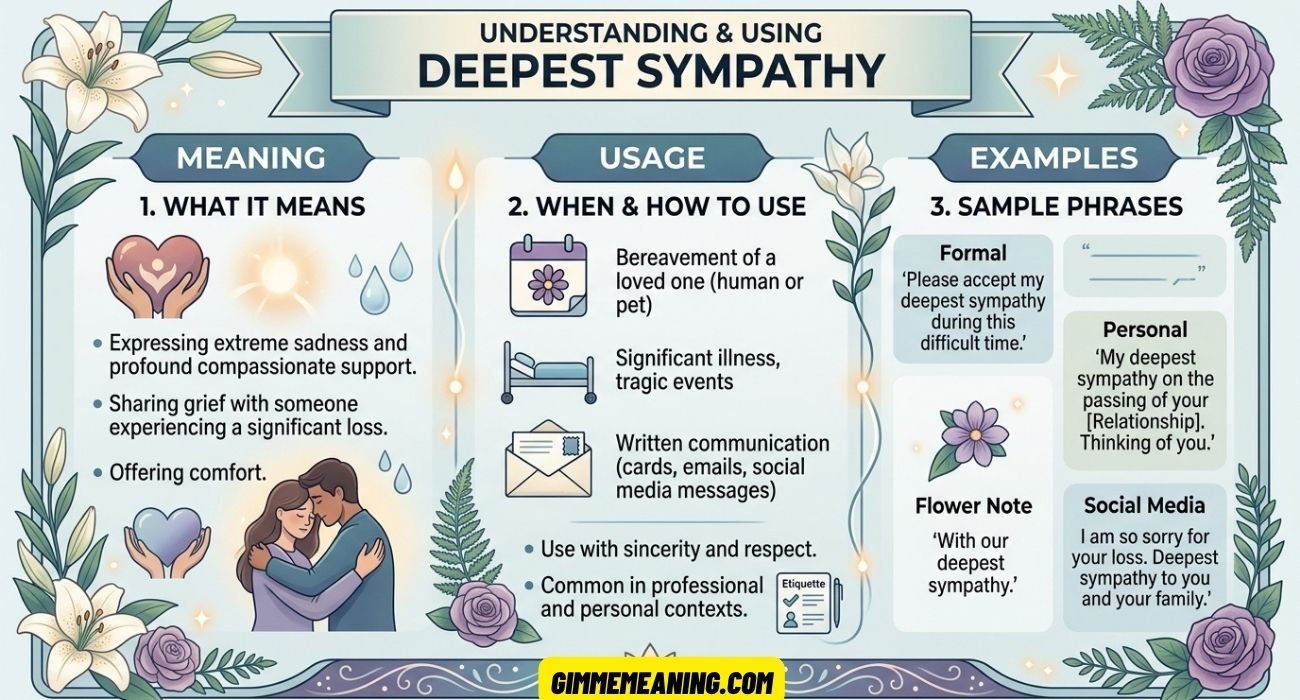
The phrase “deepest sympathy” is a strong and respectful way to show that you care about someone’s pain. If you are asking what does deepest sympathy mean, it simply means expressing a deep sense of sadness and concern for someone who is suffering.
It goes beyond basic politeness. It reflects shared sorrow, kindness, and emotional understanding. When you say “deepest sympathy,” you are offering comfort words that show you truly recognize the other person’s loss.
In simple terms, sympathy means you feel sorry for someone’s pain, but “deepest sympathy” adds more emotional depth. It becomes one of the most common sympathy expressions used in condolence phrases across English-speaking cultures.
Etymology and Origins of “Sympathy”
The word “sympathy” comes from the Greek language. It is formed from “syn,” meaning together, and “pathos,” meaning feeling or suffering. This origin helps explain the true idea behind sympathy, which is feeling together with someone.
Over time, the word became widely used in English, especially in situations of mourning and loss. In modern American culture, sympathy is closely linked to condolence message wording, funeral message examples, and sympathy card messages.
Historically, during formal mourning periods, people used structured and respectful language. This tradition shaped today’s formal condolences wording, which is still used in professional and public settings.
Related Terms and Nuances
Understanding similar words helps you use sympathy more effectively. Many people confuse sympathy with empathy, compassion, and pity. The differences are important, especially when offering bereavement support.
| Term | Meaning | Usage |
| Sympathy | Feeling sorry for someone | Common in condolence messages |
| Empathy | Feeling the same emotions | More personal and deep |
| Compassion | Wanting to help | Leads to action |
| Pity | Feeling sorry with distance | Can sound negative |
When discussing deepest sympathy vs condolences, it is important to know that condolences are expressions of sympathy, often used in formal situations. Both are part of expressing sympathy in English, but “deepest sympathy” sounds more emotional and heartfelt.
When and How to Express “Deepest Sympathy”
Knowing how to express deepest sympathy is important because timing and tone matter. This phrase is used when someone experiences loss, tragedy, or hardship.
The key is to use a respectful tone and simple language. Avoid making the message too long or complicated. Focus on kind words for loss and genuine care.
In Personal Conversations
When speaking with friends or family, your message should feel natural and warm. A sympathy message for friend loss should include emotional connection and understanding.
For example, you can say a short but meaningful message that shows compassion and care. In close relationships, your presence and support matter just as much as your words.
In Professional Settings
In workplaces, using a professional sympathy message is important. Whether it is a workplace condolence email or a formal note, the language should be polite and respectful.
Professional messages often include formal condolences wording and avoid overly emotional language. They still provide emotional support, but in a structured way.
In Writing
Writing sympathy messages requires thought and clarity. Many people search for how to write a sympathy card because they want to express their feelings properly.
A good message can be short and sincere. A short condolence message is often more powerful than a long one. Writing a personal condolence note allows you to share support in a lasting way.
Cultural Considerations
In the United States, expressing sympathy often includes cards, flowers, and attending funerals. However, cultural and religious backgrounds can influence how people handle mourning and loss.
Using supportive language and being respectful of traditions is very important. Always consider the situation before choosing your words.
Examples of Using “Deepest Sympathy” in Sentences
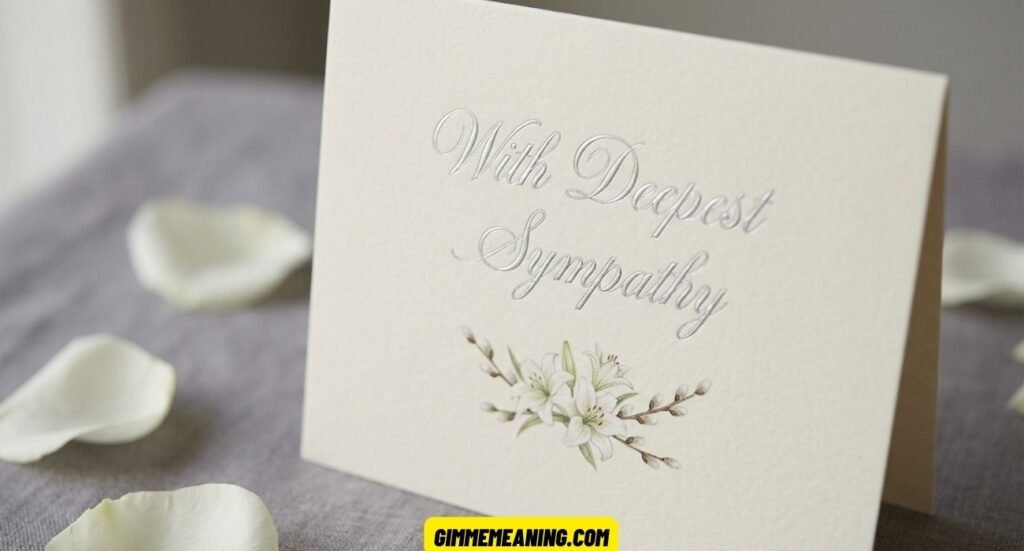
Understanding real-life usage can help you write better messages. Below are some deepest sympathy message examples that show how to use the phrase correctly.
Formal Examples
Formal messages are used in professional or public settings. These are often seen in obituary wording and official announcements.
“We extend our deepest sympathy to your family during this difficult time.”
“With deepest sympathy, we honor the memory of your loved one.”
These examples reflect proper funeral message examples and professional tone.
Personal Examples
Personal messages are more emotional and direct. They are often used as a sympathy message for loss or in close relationships.
“My deepest sympathy for your loss. I am always here for you.”
“Please accept my deepest sympathy. You are in my thoughts.”
These are examples of heartfelt sympathy messages that provide comfort and connection.
Alternative Phrasings
Sometimes you may want to use different words instead of “deepest sympathy.” These alternatives are also common in sympathy phrases for family loss.
| Phrase | Meaning |
| Heartfelt condolences | Deep care and sadness |
| Thinking of you | Emotional support |
| Sending love and prayers | Comfort and hope |
These condolence phrases can be used in both personal and formal situations.
See Also : Hassle or Hastle? Which Is Correct?
Common Phrases That Include “Sympathy”
Certain phrases are widely used in sympathy card messages and condolence notes.
“Please accept my deepest sympathy” is one of the most common phrases used when offering condolences.
“With deepest sympathy and prayers” is often used in religious or spiritual contexts.
“Our deepest sympathy goes out to you” is commonly used in group or public messages.
These expressions are part of standard sympathy expressions used in English.
Expressions Beyond Words: Showing Sympathy in Action

Words are important, but showing sympathy in action can make an even bigger impact. Supporting someone during loss often requires more than just messages.
Acts of Kindness
Helping with daily tasks is one of the best ways of helping grieving family. Providing meals, assisting with errands, or offering financial help are examples of acts of kindness after loss.
These actions show real compassion and care and provide practical support.
Nonverbal Expressions
Sometimes, silence speaks louder than words. A hug, sitting quietly, or simply being present can provide deep emotional support.
These gestures are powerful forms of supportive language without speaking.
Digital Age Condolences
Today, many people send condolences through messages, emails, or social media. Digital communication has become part of expressing sympathy in English.
Even online, it is important to use a respectful tone and thoughtful wording. A simple message can still offer comfort during grief and sorrow.
Why Saying “Deepest Sympathy” Matters
Expressing sympathy helps people feel less alone. During times of mourning and loss, people need connection and understanding.
Using the right comfort words can reduce emotional pain and build strong human bonds. Studies in psychology show that emotional support plays a key role in healing.
A well-written message, even a short one, can provide lasting comfort. That is why learning the deepest sympathy meaning and usage is so important.
Common Mistakes to Avoid
Even with good intentions, people sometimes make mistakes when expressing sympathy. Avoid using phrases that sound empty or overused. Avoid making the message about yourself instead of the grieving person.
Do not use language that sounds like pity, as it can create distance. Instead, focus on kind words for loss and sincere feelings.
Keep your message simple, respectful, and genuine. This ensures your sympathy message for loss truly supports the person in need.
See Also : Is It Correct to Say “You Are Always Welcomed?”
Understanding the Deepest Sympathy Meaning in Simple Words
The phrase deepest sympathy meaning is about showing strong care and concern for someone who is suffering a loss. When people ask what does deepest sympathy mean, it refers to sharing sadness and offering comfort during painful times. It is a respectful way to show emotional understanding and support.
In everyday life, this phrase is often used during grief and sorrow. It helps people feel less alone and more supported. Using such comfort words shows kindness and builds emotional connection. Even a simple message with sincere feelings can provide strong emotional support to someone who is grieving.
Why Expressing Sympathy Is Important in Difficult Times

During moments of mourning and loss, people often feel isolated and overwhelmed. This is why expressing sympathy in English becomes very important. It allows others to offer compassion and care, making the grieving person feel understood and supported during a difficult emotional time.
Offering kind and thoughtful words creates a sense of shared sorrow. It helps build strong relationships and trust. Whether through a message or a visit, supportive language can bring comfort. This is why offering condolences is not just a tradition, but an essential human connection.
How to Express Deepest Sympathy in the Right Way
Learning how to express deepest sympathy is important because words must be chosen carefully. A good message should be simple, honest, and respectful. Using proper condolence message wording ensures your message feels sincere and not forced or uncomfortable for the grieving person.
You should focus on kind words for loss and avoid making the message too long. A short and meaningful note can be more powerful. Using a respectful tone and gentle language helps deliver true emotional support without overwhelming the person who is dealing with loss.
Writing a Sympathy Card That Feels Genuine
Many people wonder how to write a sympathy card that truly feels personal. A good card should include simple sympathy card messages that express care and understanding. It should not sound too formal or too casual, but balanced with sincerity and warmth.
A personal condolence note can include memories, kind thoughts, or supportive words. Using heartfelt sympathy messages makes the message more meaningful. Even a short condolence message can have a strong emotional impact when written with honesty and kindness.
Professional Sympathy Message for Workplace Situations
In professional environments, using a professional sympathy message is very important. A workplace condolence email should maintain a polite and formal tone. It should offer support while respecting boundaries and avoiding overly emotional language.
Using proper formal condolences wording helps maintain professionalism. At the same time, it still provides emotional support. A simple message that expresses care and respect can strengthen workplace relationships and show understanding during times of mourning and loss.
Deepest Sympathy Message Examples for Real Life
Looking at deepest sympathy message examples can help you understand how to write your own message. These examples show how to use simple and kind language in different situations, whether for friends, family, or colleagues.
For example, a sympathy message for friend loss can be warm and personal, while sympathy phrases for family loss may sound more respectful and formal. These examples help you choose the right words and improve your condolence phrases for different situations.
See Also : Whole Day or All Day – Which Is Correct? (With Examples & Easy
Showing Sympathy in Action Beyond Words

Sometimes actions speak louder than words. Showing sympathy in action means helping people in practical ways during their time of loss. This can include helping grieving family with daily tasks or providing emotional presence.
Simple acts of kindness after loss can make a big difference. Bringing meals, offering help, or just being there shows true compassion and care. These actions provide real bereavement support and strengthen emotional connections during difficult times.
Common Mistakes to Avoid When Offering Condolences
When offering condolences, it is important to avoid common mistakes. Using overused phrases or insensitive language can make your message feel less genuine. Instead, focus on supportive language and meaningful sympathy expressions.
Avoid making the message about yourself or giving unwanted advice. Keep your message simple and sincere. Using proper funeral message examples and thoughtful wording ensures your message provides comfort and does not add to the person’s grief and sorrow.
FAQs
How do you say “with deepest sympathy”?
You can say “with deepest sympathy” in a card or message to show care and support during someone’s loss. It is often combined with kind words like “thinking of you” to offer comfort.
What is the best condolence message?
The best condolence message is simple, sincere, and supportive, showing care and understanding. It should include kind words that provide emotional comfort without being too long.
Is deepest sympathy correct?
Yes, “deepest sympathy” is correct and commonly used in both personal and professional situations. It is a respectful way to express sorrow and compassion during loss.
What to say instead of deepest sympathy?
You can say “heartfelt condolences,” “my sincere sympathy,” or “thinking of you.” These alternatives also express care, comfort, and emotional support in a gentle way.
Conclusion
Understanding the Deepest Sympathy Meaning helps people speak with care during sad times. It teaches us to use simple and kind words when someone feels loss. Clear and gentle language shows respect and support. A short message can still bring comfort and warmth. When we use the right words, we help others feel less alone and more understood.
The Deepest Sympathy Meaning also reminds us to act with kindness, not just speak. We can offer help, listen quietly, and stay present. These actions show real care and strong values. People remember sincere support for a long time. Simple words and kind actions together create true comfort and help healing begin.