
Much Love: What It Means, Whether It’s Correct, and When to Use It
You’ve typed it at the end of a message, hovered over Send, and then wondered: is this actually right? If you’ve gone looking for the much love meaning, you’re really asking two questions at once — what does this little sign-off say about you, and is it proper English in the first place?
Here’s the reassuring part: it is. “Much love” is a warm, informal way of closing a message to someone you’re fond of, and there’s nothing grammatically wrong with it. What trips people up isn’t correctness — it’s judgement. The same two words that land beautifully in a birthday card can sound oddly intimate in an email to your landlord.
So this page does both jobs: what the phrase means and why it’s built that way, then where it belongs, where it doesn’t, how to punctuate it, and what to reach for instead when “much love” isn’t quite the note you want to end on.
Understanding the Phrase “Much Love”
Quick answer: “Much love” is an informal sign-off that sends the reader a lot of affection — roughly, “you’ve got plenty of love coming from me.” It’s grammatically correct (much pairs with uncountable nouns like love), but it’s warm and personal, so save it for friends, family, and friendly messages rather than formal or professional ones.
🧠 Literal and Emotional Meaning
Taken word by word, the phrase is simple arithmetic. Much is a quantifier — Cambridge Dictionary defines it as “a large amount or to a large degree.” Love, in this sense, is the uncountable kind: affection, warmth, goodwill. Put them together and you get “a large amount of affection,” exactly what the sender intends.
But nobody who writes “much love” is doing arithmetic. Emotionally, it does something subtler than “I love you”: it sends affection in someone’s direction without making a declaration at them. That lightness is the point — you matter to me, this is warm, and neither of us has to make a ceremony of it. Affection with the pressure turned down is why it works for friends, cousins, and online communities as well as family.
💬 How It’s Used in Modern English
You’ll meet “much love” in three main places:
- As a sign-off, sitting where “Best wishes” or “Kind regards” would sit in a formal letter: “Thanks for everything. Much love, Priya.”
- As a standalone send-off inside a message, often after thanks or congratulations: “You did it! Much love to you and the whole team.”
- As a public thank-you, aimed at a group rather than one person: “Much love to everyone who came last night.”
All three have one thing in common: the writer is closing something — a letter, a conversation, an event — on a warm note. “Much love” is fundamentally an ending; it rarely opens anything.
🎵 Pop Culture Influence
Spend time around music culture and you’ll hear it constantly. “Much love” has long been a staple sign-off in hip-hop and R&B — the verbal equivalent of a raised glass at the end of a track or an awards speech — and from there it slid into social media captions and comment sections, where artists thank fans in the same breath. Fan communities made it their own: it now appears under charity livestreams and thank-you posts as readily as on a stage. Because it travelled through music and social media rather than letter-writing manuals, the phrase reads young, open, and unbuttoned — the warmth is sent out loud, where others can see it too.
Grammar and Structure: Is “Much Love” Grammatically Correct?
Yes — and the reason is a tidy piece of grammar. English splits nouns into countable ones (a chair, three chairs) and uncountable ones (water, time, advice). Much belongs with the uncountable set, and love — the abstract feeling, not a specific romance — is uncountable. So “much love” follows the same pattern as “much respect” and “much appreciated.”
🔤 Why It’s Correct
Two things make the phrase correct rather than merely tolerated:
- The quantifier matches the noun. “Much love” works for the same reason “many loves” doesn’t: you can’t count love in units. (When “loves” does appear, it means something else — a person’s romantic interests, as in “the two loves of her life.”)
- Sign-offs are allowed to be fragments. “Much love” has no verb — a problem in an essay, no problem at all in a closing line. English closings are a family of polite fragments: “Best wishes.” “Warm regards.” Nobody demands a verb from “Kind regards,” and “much love” plays by the same rules.
Cambridge Dictionary’s entry for love quietly confirms the arrangement: it notes that you can write love, love from, all my love, or lots of love before your name at the end of letters to family and friends. “Much love” is a close cousin of those closings — same slot, same job, same audience.
✅ Correct and Incorrect Usage
| Type | Example | Why |
|---|---|---|
| ✅ Correct | Much love, see you Sunday! | Informal sign-off to someone you know well |
| ✅ Correct | Sending much love your way today. | A complete sentence — the phrase works inside one too |
| ✅ Correct | Much love to everyone who helped. | A public thank-you aimed at a group |
| ❌ Incorrect | Many loves to you. | “Many” needs a countable noun; love (the feeling) isn’t one |
| ❌ Incorrect | Much loves for you. | Pluralising “love” breaks the uncountable pattern |
| ❌ Awkward | Dear Mr Patel, … Much love, Tom. | Grammatically fine, socially wrong — the tone clashes with the formal opening |
That last row is the one that matters day to day: almost every real-world “much love” problem is a tone problem wearing a grammar costume.
How to Punctuate “Much Love”: Commas, Capitals, and Exclamation Marks
The competitor guides skip this, but it’s what people quietly get wrong. Three small decisions shape how your sign-off lands:
- As a sign-off, it takes a comma and a capital M. The closing line starts a new line, so it starts with a capital: Much love, then your name beneath it. The comma is the standard closing comma, as in “Best wishes,” — it signals “message over, name follows.”
- Inside a sentence, it stays lowercase. As part of a running sentence — “sending you much love and luck for tomorrow” — it’s an ordinary noun phrase, no capital, no special treatment.
- The exclamation mark is a volume knob. “Much love.” is calm and sincere; “Much love!” is brighter — right for celebrations and group thank-yous, a bit much for a condolence card. The punctuation is part of the message.
One more: stacked closings (“Much love, take care,”) look indecisive — choose one ending and commit to it.
Appropriate Contexts for Saying “Much Love”
The rule of thumb: “much love” belongs wherever warmth is expected and the relationship can carry it — most of your personal life, very little of your professional one.
💌 In Personal Communication
Cards and letters to people you know well are the phrase’s home ground. Birthday cards, thank-you notes, get-well messages, letters to old friends — in all of these, “much love” reads as genuine rather than gushing, because it’s shorter and cooler than “with all my love.” A few natural shapes:
- “Happy birthday! Much love, and see you at dinner.”
- “Thank you for the loan of the car — much love to you both.”
📱 On Social Media
Online, the phrase does a slightly different job: it’s a public embrace. Creators end thank-you posts with it, and friends use it on birthday posts where a private “I love you” would feel oddly intense for a public wall. Because the audience is partly strangers, it hits a useful middle register — warmer than “thanks,” safer than “love you” — one of the most reliable warm closings for a public account.
👨👩👧 Between Friends, Family, and Partners
Within close relationships, the phrase flexes. Between friends it’s breezy — “Much love, bro” carries affection with a wink. To family it’s the default warm ending for parents, siblings, and cousins you actually like. Between partners it’s softer than the full declaration — handy for everyday messages, where the tenth text of the day doesn’t need ceremony but “much love” keeps the warmth topped up. Context decides the dosage; the phrase itself stays the same.
When “Much Love” Isn’t the Right Choice
The phrase fails in one direction only: it brings personal warmth into rooms that run on professional distance. Nobody is offended by “much love” from a friend; people have raised an eyebrow at it from a supplier.
🚫 Avoid It In:
- Work emails to anyone senior, new, or external. Your boss, a client, a hiring manager — all get “Kind regards” or “Best regards.” The one exception is a genuinely close colleague on a personal matter (a bereavement, a new baby).
- Academic and official writing. Essays, applications, and formal letters have no sign-off slot for affection at all.
- Customer-facing messages. If you’re writing as a business, “Thank you” and “Warm regards” carry the friendliness without the intimacy.
- First contact with anyone. Warmth has to be earned; leading with “much love” to a stranger reads as presumptuous rather than kind.
💡 Why Tone Matters
A closing line is the last taste a message leaves. “Much love” promises a relationship — closeness, history, mutual ease. When that promise matches reality, the message feels generous; when it doesn’t, the reader feels a small jolt of wait, are we…? That jolt, not grammar, is what people are really asking about when they search whether the phrase is “correct.” Match the closing to the relationship you actually have, and you’ll never go wrong.

Saying “Much Love” in a Condolence Message
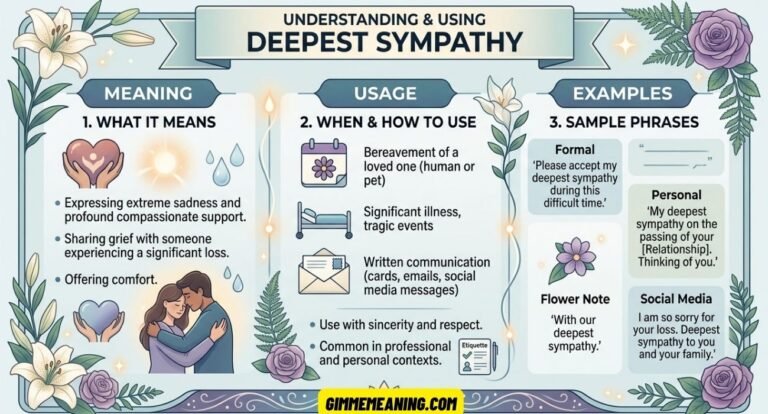
Condolence notes are where readers most often freeze over this phrase — the wish to be warm is strongest exactly where the fear of saying the wrong thing is too. The honest answer: “much love” is welcome in most condolence messages, because grief is a personal context. “Thinking of you all. Much love, Hannah” is a kind, ordinary thing to write to a bereaved friend or relative.
Three adjustments keep it right:
- Lower the volume. Full stop, not exclamation mark. “Much love.” sits quietly; “Much love!” sounds like a birthday card wandered into the wrong envelope.
- Let it follow substance, not replace it. A line acknowledging the loss first — “I was so sorry to hear about your dad” — then the closing. “Much love” as the whole message can feel like it skipped the hard part.
- Know when to step down a register. For a colleague’s loss or a family you know only slightly, “With sympathy” carries the care with less intimacy. The closer you are, the more “much love” is expected.
Cultural and Emotional Significance
Warm closings are a human universal; the exact words are local. “Much love” is a distinctly English, distinctly informal member of that family, and it translates feeling-for-feeling rather than word-for-word.
🌍 Across Cultures
Other languages keep their own stock phrases for the same slot: Spanish speakers close warm messages with “con mucho cariño” — “with much affection,” a near-perfect cousin — while French “avec amour” (“with love”) stays mostly inside family and romance. One caution for English learners: “much love” feels more casual in English than its literal translations may suggest in your own language, so calibrate by the relationship, not by how the words sound at home. When in doubt, “Best wishes” and “Take care” travel anywhere.
💖 Emotional Impact
Why does a two-word fragment carry so much weight? Because closings are where messages stop transmitting information and start transmitting relationship: the body says what happened, the sign-off says what we are to each other. “Much love” answers generously and briefly — it costs the writer nothing, asks nothing of the reader, and leaves the door open. That’s why it appears at moments of gratitude, distance, and goodbye, when people want to say this connection matters without writing an essay about it.
Alternatives to “Much Love”
When “much love” is too warm, too casual, or just used-up, swap by register:
🗣️ Casual or Friendly
- Lots of love — the closest relative; a touch softer and more traditional
- Love you! — breezier, more spoken than written
- Take care — warm without any romance at all
- Cheers — friendly and light (especially British)
- Big hugs — playful, physical, unmistakably platonic
💼 Professional or Formal
- Kind regards — the all-purpose safe closing
- Warm regards — one degree friendlier, still office-safe
- Best wishes — polite for milestones and goodbyes
- Sincerely — the most formal of the common closings
- With gratitude — warm-professional, good for thank-you emails
🎨 Expressive or Creative
- Sending you all the good vibes — modern, playful, group-friendly
- Peace and love — retro, relaxed, a little theatrical
- Forever grateful — for when thanks is the real message
- Yours in chaos — in-joke territory; only for people who’ll get it
| Phrase | Tone | Best for | Example |
|---|---|---|---|
| Much love | Warm, casual | Friends, family, followers | “Much love, all of you!” |
| Lots of love | Warm, traditional | Close family, cards | “Lots of love, Mum.” |
| With love | Gentle, classic | Cards, letters | “With love, Emily.” |
| Take care | Neutral-warm | Almost anyone | “Take care and stay safe.” |
| Warm regards | Polite, professional | Work email | “Warm regards, Daniel.” |
Comparing “Much Love” with Related Phrases
These five closings all live in the same neighbourhood, but they don’t say the same thing. The differences are small and real:
| Phrase | Warmth | Feels like | Reach for it when |
|---|---|---|---|
| Much love | High, casual | A friendly hug in two words | Friends, family, followers — everyday warmth |
| Lots of love | High, traditional | A family card signed at the kitchen table | Close family, handwritten cards |
| With all my love | Very high, devoted | A declaration, not a pleasantry | Partners, milestone letters, anniversaries |
| Love always | High, committed | A promise as much as a closing | Long-term partners, closest family |
| Best wishes | Medium, polite | A firm, friendly handshake | Acquaintances, colleagues, milestones at work |
The pattern: the more possessive and total the wording — “all my love,” “love always” — the deeper the commitment and the narrower the audience. “Much love” sits at the wide end of the warm zone, which is precisely why it spread so far.
“Much Love” vs. “Lots of Love”: The Small Difference That Matters
If two closings cause more dithering than any others, it’s these two. Grammatically, much and lots of are both quantifiers for uncountable nouns, so both are correct, full stop — nobody will ever mark either wrong.
The difference is flavour. “Lots of love” is the older, cosier phrase — the one on family cards, the one grandparents sign, the one Cambridge’s entry lists among the standard letter closings. “Much love” is leaner and more modern; it drops the “of,” moves faster, and carries a social-media polish. To most readers under forty, “much love” feels like a text; “lots of love” feels like a card.
Practical rule: match the medium. Handwriting, sympathy, and family formality lean “lots of love”; messages, captions, and everyday warmth lean “much love.” And if your correspondent signs “lots of love,” mirror them — matching a closing is the oldest politeness trick in letter-writing.
“Much Love” vs. “Love You”: Why They Don’t Land the Same Way
These two get swapped constantly, but they do different jobs. “Love you” is a statement — a small, direct declaration aimed at one person, with an I hiding inside it (“[I] love you”) and a you standing right there receiving it. Said to the wrong person, it can’t be unsaid.
“Much love” is a sending, not a statement. It names the affection without naming a lover or a beloved, which is why it scales — one friend, a group chat, ten thousand followers, it stays proportionate in every direction. Think of “love you” as a spotlight and “much love” as warm lighting for the whole room: the spotlight for people you’d say it to face to face, the warm lighting for everyone else you genuinely wish well.
Common Grammar and Language Questions Related to “Much Love”
Readers who puzzle over “much love” tend to puzzle over the same handful of neighbours. Quick, honest answers:
📘 Is It Correct to Say “Big Thanks”?
Yes — informally. “Big thanks” is a cheerful, spoken-style way of saying a lot of thanks, perfectly at home in messages and posts. It isn’t built as tidily as “many thanks,” though (thanks can be counted in a way love can’t). In formal writing, the polished choices are “Many thanks” — or simply “Thank you very much” written out in full.
✍️ What Is a Possessive Apostrophe?
It’s the apostrophe that shows ownership. One owner: Sarah’s car. Several owners: the students’ books. The trap is it’s, which never shows possession — it always means “it is.” The possessive form is its, no apostrophe at all.
🔁 Can You Use “And” Twice in a Sentence?
Yes. “And” can appear as often as the sentence genuinely needs — “We packed sandwiches and juice and crisps for the train” is clunky but correct. What grammar actually forbids is joining things that don’t match in shape. If it reads clearly, the repeated “and” is a style choice, not an error.
📚 Understanding Relative Clauses
A relative clause is a short stretch of a sentence that describes a noun in more detail, usually introduced by words like who, which and that. Take this sentence: “The colleague who proofreads my work is on holiday.” The clause tells you which colleague. Delete it and the sentence still stands — that’s the test.
🗣️ “Regarding To” or “Regarding”?
Just “regarding.” Regarding already means “concerning,” so the “to” is spare parts: “Regarding to your email” is wrong; “Regarding your email” is right.
Case Study: “Much Love” in Real-Life Communication
Call it a tale of two closings — the same words in two everyday messages, where the setting, not the grammar, decides whether they work.
Message A — an email to a manager:
“Thank you for approving my leave. Much love, James”
Nothing here is ungrammatical, and yet it jars: the email opened a professional transaction, and the closing suddenly claims a warmth the relationship hasn’t established.
Message B — a text to a friend:
“Tickets booked!! See you Friday. Much love ❤️”
Same phrase, zero friction: the relationship carries it and the celebration invites it.
The lesson generalises: correctness is a property of the sentence, appropriateness is a property of the relationship. Check the second and the first rarely matters.
Quick Reference: When to Use “Much Love”
| Situation | Use it? | Better choice / example |
|---|---|---|
| Card or text to a close friend | ✅ Yes | “You star — much love!” |
| Family group chat | ✅ Yes | “Much love to everyone at home.” |
| Public thank-you post | ✅ Yes | “So grateful for the support — much love to you!” |
| Condolence card to a friend | ✅ Yes, quietly | “Thinking of you. Much love.” (full stop, no “!”) |
| Email to your boss or a client | ❌ No | “Kind regards” |
| Job application or formal letter | ❌ No | “Sincerely” / “Yours faithfully” |
| First message to someone new | ❌ Not yet | “Best wishes” until you know them |
| Customer-facing business message | ❌ No | “Thank you” / “Warm regards” |
A 10-Second Self-Check Before You Sign Off
Run these three questions before “much love” leaves your drafts folder:
- Would I say it out loud to this person? If the spoken version feels natural, the written one will too.
- Personal or transactional? Personal: proceed. Transactional: switch to “Kind regards” or “Thank you.”
- Closing, or declaring? If you mean “I love you,” write that (to the right person). “Much love” is a wave, not a vow.
Three clears and you can send it without the hover. And if these small word-choice puzzles are your thing, our guide to pre and post meaning unpacks another pair of everyday words that look simple and aren’t.
FAQs About “Much Love”
What does “much love” mean?
It means you’re sending someone plenty of affection and goodwill — “a lot of love, from me to you.”
It’s most often used as a warm closing to a message, card, or post.
Is “much love” formal or informal?
Firmly informal — friends, family, and friendly public messages.
Formal and professional writing uses “Kind regards” or “Sincerely” instead.
Can I say “much love” in an email?
Yes — if the email is personal, or to a close colleague about a personal matter.
For bosses, clients, and first contacts it reads as over-familiar; choose a professional closing.
Is “much love” the same as “lots of love”?
Nearly — both are correct, and both mean a lot of affection.
“Lots of love” feels softer and more traditional (the family-card closing); “much love” leaner and more modern.
Can men say “much love”?
Absolutely. The phrase is gender-neutral and extremely common among men, especially between friends.
Its life in music and sports culture means it often reads as less sentimental than “with all my love.”
Conclusion
So — is “much love” correct? Yes, completely: grammatically sound, dictionary-family approved, and used by millions of fluent speakers every day. The only real skill lies in placement: it’s a warm, informal closing, and it shines exactly where warmth is welcome — cards to friends, messages to family, thank-yous to the people who showed up for you.
Keep it out of the boardroom, soften it for the sad occasions, and punctuate it like you mean it, and “much love” will never embarrass you. Every message ends with some kind of valediction — you may as well pick one that leaves people feeling something good.




One Comment