
Puting or Putting: Which Spelling Is Correct in 2026?
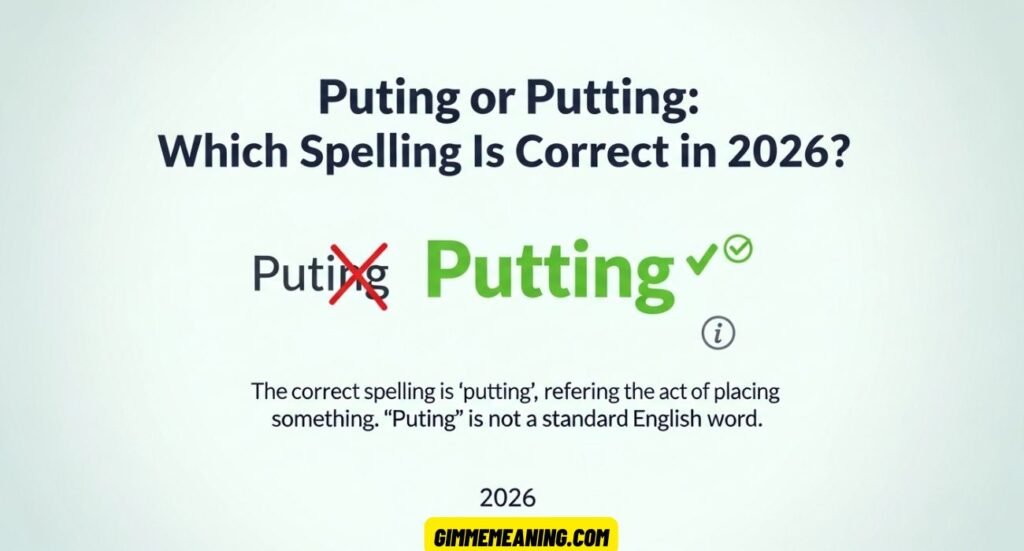
“Puting or Putting” refers to a common spelling confusion in English. “Putting” is the correct form of the verb “put” with -ing. It means placing or moving something. “Puting” is not a correct word in English.
Many students feel unsure when they write this word. It looks simple but can be tricky. A small mistake can change how your writing looks. Learning the right spelling can make your writing better.
This topic is part of basic English spelling rules. It helps you understand how verbs change with -ing. The correct form is always “putting” with double “t.” Knowing this rule helps you avoid common errors.
Puting or Putting – Quick Answer

The answer is simple and clear. The correct word is putting, and puting is always wrong.
The word putting comes from the verb put and is used as the present participle of put. It describes an action that is happening right now, which is why it is also used as the verb put in present continuous.
Here is a simple table to understand it better:
| Form | Correct or Incorrect | Example |
| Putting | ✅ Correct | She is putting the books on the table. |
| Puting | ❌ Incorrect | She is puting the books on the table. |
If you are wondering is puting correct, the answer is always no. The putting spelling must include a double “t.”
The Origin of Puting/Putting
To understand why putting is correct, we need to look at the history and rules of English. The word put comes from Old English, and over time, English developed specific patterns for adding ing to verbs.
One important rule in English grammar rules for verbs is the short vowel spelling rule. This rule explains that when a short verb ends in a consonant, you often double the final consonant before adding “-ing.”
This is known as the doubling consonants rule, and it is a key part of spelling rules in English.
Here is a helpful table of consonant doubling examples:
| Base Verb | Incorrect Form | Correct Form |
| run | running vs runing | running |
| sit | sitting vs siting | sitting |
| stop | stopping vs stoping | stopping |
| begin | beginning vs begining | beginning |
| swim | swimming vs swiming | swimming |
| put | puting | putting |
This clearly shows what is the rule for adding ing and also answers the question: when do you double consonants in English. The final consonant must be doubled when the verb is short and has a single vowel sound.
British English vs American English Spelling
Many learners wonder if spelling changes between countries. They often ask, is putting correct in American English or is putting correct in British English.
The answer is simple. There is no difference at all. Both American and British English use the same spelling: putting.
| Region | Correct Spelling | Notes |
| United States | Putting | Standard usage |
| United Kingdom | Putting | Standard usage |
| Global Mistake | Puting | Always incorrect |
This means you do not need to worry about regional differences. Whether you are writing for a US audience or a global audience, the correct spelling of putting never changes.
Which Spelling Should You Use?

You should always use putting in every situation. This applies to formal writing like essays and reports, as well as informal writing like messages and emails.
Using the wrong spelling can make your writing look careless. Even though puting may seem logical when typing quickly, it does not follow the spelling rules in English.
If you remember just one thing, remember this: the putting spelling always includes a double “t.” This small detail makes a big difference in clear communication.
Common Mistakes with Puting/Putting
Many people make mistakes because they write words the way they sound. This is called phonetic spelling, and it often leads to errors.
Here is a table showing common mistakes:
| Incorrect Sentence | Correct Sentence | Explanation |
| I am puting the files away. | I am putting the files away. | Double consonant needed |
| She is puting on her shoes. | She is putting on her shoes. | Rule for short verbs |
| They were puting chairs outside. | They were putting chairs outside. | Grammar rule applies |
These mistakes happen because people forget the doubling consonants rule. Learning this rule helps you avoid many common spelling mistakes in English.
Puting or Putting in Everyday Examples
Understanding rules is helpful, but seeing real examples makes learning easier. Below are some putting examples used in daily life.
| Situation | Sentence |
| School | She is putting her homework in her bag. |
| Office | He is putting the documents on the desk. |
| Home | I am putting the groceries in the fridge. |
| Sports | He is putting the ball in position. |
| Text Message | I am putting this here so you see it. |
These examples show the natural use of the word and help you understand the putting meaning in different contexts.
Google Trends & Usage Data
When we look at online data, we see a clear pattern. The word putting is used much more often than puting. This shows that people recognize the correct form, even though mistakes still happen.
Search engines and writing tools like spell checkers quickly mark puting as incorrect. This is because it does not follow standard English grammar rules for verbs.
In digital writing, using the correct form is important for credibility. Whether you are writing a blog, email, or social media post, correct spelling helps build trust.
Spelling Rule Explained (Double Consonant Rule)
The most important concept to understand here is the doubling consonants rule. This rule answers questions like why is putting spelled with double t.
When a verb is short and ends with a single consonant, you double that consonant before adding “-ing.” This is part of adding ing to verbs in English.
This rule applies to many verbs and is a key part of English grammar rules for verbs. Learning it once helps you avoid many errors in the future.
Memory Tricks to Avoid “Puting”
A simple way to remember this rule is to focus on the length of the word. Short verbs usually need a double consonant before adding “-ing.”
Think of it like this: short word, double ending. This trick works for many verbs and makes it easier to remember the correct form.
Why “Putting” Is the Correct Spelling

The confusion between puting vs putting often comes from how the word sounds when spoken. Many people assume that spelling follows pronunciation, but English does not always work that way. The correct spelling of putting follows a specific grammar rule, not just sound.
When learning how to spell putting correctly, it helps to remember that English spelling is based on patterns. The word put changes to putting because of the doubling consonants rule, which is common in many verbs. This ensures clarity and consistency in writing.
See Also : Girlie or Girly – Which Spelling Is Correct with Examples
Understanding the Meaning and Use of Putting
The word putting is the present participle of put, which means placing or moving something somewhere. It is commonly used in continuous tenses, making it part of the verb put in present continuous structure in everyday English.
The putting meaning becomes clearer when used in sentences like “She is putting the keys on the table.” This also reflects the putting definition, which focuses on an action happening right now rather than something completed in the past.
What Is the Rule for Adding -ing to Verbs?
One of the most important spelling rules in English is understanding what is the rule for adding ing. When verbs are short and end in a consonant, you usually double that consonant before adding “-ing.”
This rule explains when do you double consonants in English. Words like run, sit, and stop follow this pattern, becoming running, sitting, and stopping. These consonant doubling examples help learners apply the rule correctly in writing.
Why Do People Write “Puting” by Mistake?
Many learners make this mistake because they rely on pronunciation rather than grammar rules. Since puting sounds similar to putting, people assume it is correct, leading to one of the most common spelling mistakes in English.
Another reason is fast typing, especially on phones or keyboards. Without thinking about English grammar rules for verbs, writers may skip the extra “t,” forgetting the short vowel spelling rule that requires doubling the consonant.
Comparing Putting with Similar Verb Forms
Understanding other verbs can help reinforce the rule. Words like running vs runing, sitting vs siting, and stopping vs stoping clearly show how incorrect forms drop the doubled consonant.
More examples like beginning vs begining and swimming vs swiming highlight the same pattern. These comparisons make it easier to understand why putting is correct and why puting does not follow standard spelling rules.
Is Putting Correct in British and American English?
Many learners wonder if spelling changes between regions, asking questions like is putting correct in American English or is putting correct in British English. The answer is simple: both use the same spelling.
Unlike some words that differ between US and UK English, putting remains consistent worldwide. This makes it easier for learners because they do not need to memorize different versions for different audiences.
See Also : What Does “Deem Fit” Mean? Usage, Legal Insights
Putting Examples in Everyday Communication

Using real-life sentences helps you understand how the word fits into daily communication. Simple putting examples include phrases like “I am putting my phone on silent” or “They are putting the chairs away.”
These examples show how natural the word feels in conversation and writing. Learning through context makes it easier to remember the putting spelling and apply it correctly without hesitation.
Tips to Avoid Common Spelling Errors
Avoiding mistakes like puting becomes easier when you understand the rules behind them. Learning the doubling consonants rule and practicing adding ing to verbs helps build strong writing habits.
Consistent practice also reduces common spelling mistakes in English. When you recognize patterns and apply them regularly, you gain confidence in your writing and improve overall accuracy in grammar and spelling.
FAQs
Which is correct, putting or puting?
“Putting” is correct; “puting” is always a spelling mistake.
Is putting grammatically correct?
Yes, “putting” is grammatically correct as the present participle of “put.”
How do you spell putting as in putting something away?
It is spelled “putting” with a double “t.”
What is puting?
“Puting” is an incorrect spelling and not a valid English word.
Conclusion
We learned the difference between Puting or Putting in a clear and simple way. The correct word is always “putting,” and it follows a basic spelling rule in English. We use this word when we talk about placing something somewhere. The extra “t” is very important because it follows the doubling consonant rule. This rule helps us write correctly and avoid small but common mistakes in everyday writing.
Good spelling helps your writing look neat and professional. When you understand simple rules, you can write with more confidence. Always remember that “putting” is correct and “puting” is wrong. Practice using the word in sentences every day. With time, this spelling will become easy and natural for you.