
Happy Holiday or Happy Holidays? Exploring the Difference (Complete Guide for U.S. Usage)
“Happy Holiday or Happy Holidays” are common greetings used during festive times. “Happy Holiday” means one special day, while “Happy Holidays” means many celebrations. People use these phrases to share good wishes with others.
Many people feel confused when choosing the right phrase. The words look very similar but carry different meanings. This small choice can change how your message sounds to others.
In the United States, “Happy Holidays” is more popular and widely used. It includes many events like Christmas and New Year. This phrase helps people sound polite, friendly, and inclusive in different situations.
Understanding the Core Difference Between “Holiday” and “Holidays”

The key to solving the confusion lies in understanding the words themselves. The singular form “holiday” refers to one specific day, while the plural “holidays” refers to a period that includes multiple celebrations.
In American English, this difference is very important. A single holiday could be Christmas Day or Independence Day, but the holiday season usually includes several events grouped together, especially during the winter months.
This is where the “happy holiday meaning” and “happy holidays meaning” become different. The singular form focuses on one event, while the plural form covers a broader time filled with multiple traditions and celebrations.
Singular vs. Plural Meaning in Context
To understand better, imagine someone saying, “Have a happy holiday on July 4th.” This clearly refers to one day. Now compare that with “Happy Holidays,” which includes Thanksgiving, Christmas, Hanukkah, Kwanzaa, and New Year’s.
This is why many people ask, “what does happy holidays include”. In the U.S., it usually includes all major celebrations from late November through early January.
Quick Comparison
The table below makes the difference easier to understand:
| Phrase | Meaning | Usage | Example |
| Happy Holiday | Refers to one specific day | Rare in U.S. greetings | “Have a happy holiday this Labor Day!” |
| Happy Holidays | Refers to multiple celebrations | Common and preferred | “Happy Holidays to you and your family!” |
This simple comparison answers the common question: “is it correct to say happy holiday or happy holidays”. Both are correct, but they are used in different situations.
“Happy Holiday”: Meaning, Usage, and Why It’s Rare in the U.S.
The phrase “Happy Holiday” is not wrong, but it is rarely used in everyday American speech. The “happy holiday meaning” is clear—it wishes someone well for one specific holiday—but it often sounds incomplete or unusual.
Many Americans feel that the singular version lacks warmth. It does not reflect the full festive atmosphere of the season. This is why people often ask, “is happy holiday grammatically correct”. The answer is yes, but it is not commonly used as a general greeting.
Common Perception in the U.S.
In the U.S., people are used to hearing plural forms in greetings. The phrase “Happy Holidays” feels more natural because it matches how people experience the season. It includes multiple events, family gatherings, and traditions.
When does “Happy Holiday” make sense?
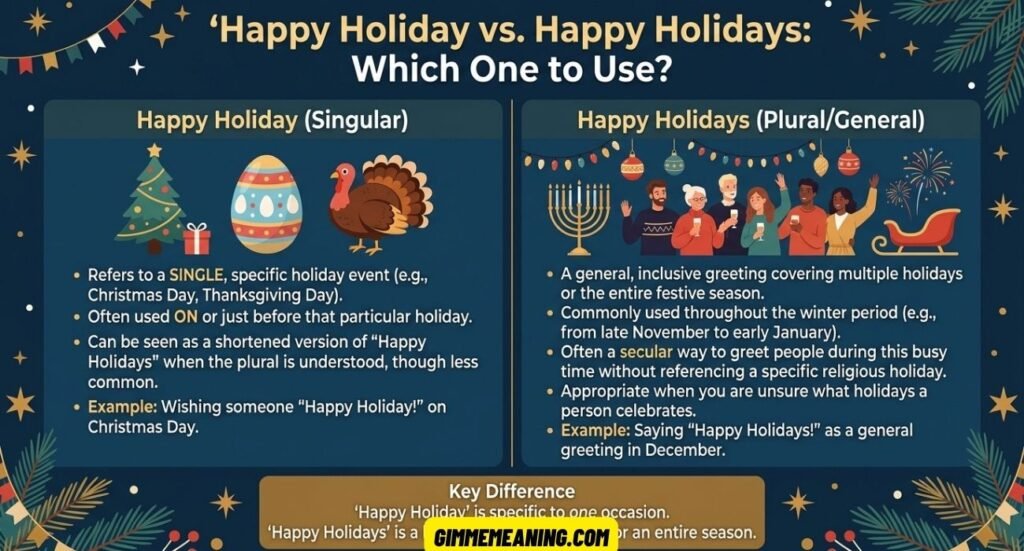
Even though it is rare, there are situations where “Happy Holiday” works well. It is appropriate when you are talking about one specific celebration. For example, you might say it when referring to Independence Day or Labor Day.
Another situation is in British English, where “holiday” often means vacation. In that context, someone might say, “Have a happy holiday,” meaning enjoy your trip.
This helps answer questions like “should I say happy holiday or happy holidays in email”. If your email is about one specific event, the singular form can work. Otherwise, the plural form is safer.
“Happy Holidays”: The Standard American Greeting
In the United States, “Happy Holidays” is the most common seasonal greeting. It appears everywhere, from stores and advertisements to emails and greeting cards.
The “happy holidays meaning” goes beyond just one celebration. It represents the entire festive period and is widely accepted in both personal and professional settings.
Why plural is preferred
The plural form is preferred because it includes multiple celebrations. It sounds complete, warm, and welcoming. It also avoids making assumptions about what someone celebrates.
This is why people often ask, “is happy holidays more appropriate”. In most cases, the answer is yes, especially in diverse environments.
Popularity and adoption
Over time, businesses and organizations have adopted “Happy Holidays” as a standard greeting. It is widely used in holiday greetings, seasonal greetings, and business holiday messages because it works for everyone.
See Also : Deepest Sympathy Meaning, Usage, and Examples (Complete Guide)
The Inclusive Spirit Behind “Happy Holidays”
One of the main reasons for the popularity of “Happy Holidays” is inclusivity. The United States is home to many cultures and religions, and not everyone celebrates the same holidays.
Using this phrase shows respect and understanding. It reflects inclusive language and supports multicultural celebrations. This is also why people ask, “why do people say happy holidays instead of merry christmas”.
The answer is simple. “Happy Holidays” includes everyone, while “Merry Christmas” refers to one specific religious celebration. This makes it more suitable for workplaces, schools, and public communication.
Grammar and Capitalization Rules

Understanding grammar rules is important when writing holiday season messages. Proper usage makes your message look professional and polished.
Capitalization
When used as a greeting, both words should be capitalized, as in “Happy Holidays.” In a sentence, lowercase may be used depending on the structure.
Common Mistakes
Many people make simple mistakes such as writing everything in lowercase or forgetting the plural form. These small errors can affect clarity and professionalism.
Proper Punctuation
Punctuation also matters. A simple exclamation mark can make your message feel warm and friendly, while a period makes it more formal.
Regional and International Variations
The meaning and usage of these phrases can change depending on location. This adds another layer to the “difference between happy holiday and happy holidays”.
U.S. vs. U.K.
In the U.S., “Happy Holidays” is a festive greeting. In the U.K., “holiday” often means vacation, so the phrase may not carry the same meaning.
Other English-speaking countries
Countries like Canada and Australia use both forms, but “Happy Holidays” is still common, especially in professional settings.
Regional U.S. trends
In some parts of the U.S., people still prefer “Merry Christmas.” This leads to the comparison “happy holidays vs merry christmas”, which often depends on tradition and personal preference.
“Happy Holidays” in Modern Communication
Today, “Happy Holidays” is used in many forms of communication, including digital platforms. It is a key part of modern holiday etiquette.
Email signatures
Many companies include it in their email holiday signature. It is professional and suitable for clients and coworkers.
Social media posts
On social media, it appears in captions, hashtags, and festive wishes shared with a wide audience.
Casual texts and chats
Friends often use it in messages, sometimes with emojis, making it more relaxed and friendly.
Formal vs. casual tone
The phrase works in both formal and informal settings. This flexibility makes it ideal for greeting card wording and everyday communication.
Practical Usage Guide
Choosing the right phrase depends on context, audience, and purpose. Understanding “when to use happy holidays” helps you avoid confusion.
Checklist for choosing the right phrase:
If you are referring to one specific day, the singular form may work. If you are addressing a group or talking about the entire season, the plural form is better. If you are unsure, always choose the inclusive option.
See Also : Hassle or Hastle? Which Is Correct? (Complete Guide with Meaning
Case Study: Retailers Choosing “Happy Holidays”
A good example of this shift can be seen in major U.S. retailers. Over the years, companies changed their messaging from “Merry Christmas” to “Happy Holidays.”
This decision was based on customer feedback and the need for cultural sensitivity in language. Businesses wanted to connect with a broader audience and avoid excluding anyone.
As a result, “Happy Holidays” became the standard in advertising, branding, and professional holiday greetings examples used across industries.
Happy Holiday vs Happy Holidays: Why the Difference Matters

The debate around happy holiday vs happy holidays often seems small, but it actually reflects how language shapes connection. In the United States, greetings are more than just words. They show awareness, respect, and tone. Choosing the right phrase can make your message feel warm and thoughtful instead of awkward or incomplete.
Understanding the difference between happy holiday and happy holidays helps you communicate clearly in both personal and professional settings. While one refers to a single event, the other embraces an entire season. This small grammatical shift can influence how your message is received, especially in diverse environments.
Understanding Happy Holidays Meaning in Modern Usage
The happy holidays meaning has evolved over time, especially in American culture. Today, it represents a broad and inclusive greeting that covers multiple celebrations. It is commonly used in workplaces, advertisements, and public communication because it avoids focusing on just one tradition.
When people ask what does happy holidays include, the answer usually involves a range of events such as Christmas, New Year’s, and other winter holidays. This flexibility makes it a practical choice for communicating with different audiences during the festive season.
Happy Holiday Meaning and Its Limited Use
The happy holiday meaning is simple and direct, as it refers to wishing someone well for a single celebration. However, this phrase is not commonly used in the United States as a general greeting. It often sounds incomplete when used during the holiday season.
Many people wonder, is happy holiday grammatically correct, and the answer is yes. Still, it is rarely used because it does not reflect the full festive atmosphere. Most Americans prefer a phrase that feels broader and more inclusive in tone.
When to Use Happy Holidays in Daily Communication
Knowing when to use happy holidays can make your communication smoother and more effective. This phrase works well in emails, greeting cards, and social media posts because it covers multiple celebrations without assuming what someone observes.
If you are unsure, it is often better to choose the plural form. This is why people frequently ask, should I say happy holiday or happy holidays in email. In most professional and casual situations, the plural version feels more natural and widely accepted.
Why Do People Say Happy Holidays Instead of Merry Christmas
The question why do people say happy holidays instead of merry christmas is common, especially in multicultural societies. The main reason is inclusivity. Not everyone celebrates Christmas, so a broader greeting helps include more people.
This shift also reflects modern values like inclusive language and respect for diversity. By using a neutral phrase, individuals and businesses can communicate in a way that feels welcoming to people from different cultural and religious backgrounds.
Is Happy Holidays More Appropriate in Professional Settings
Many people ask, is happy holidays more appropriate, especially in workplaces. In most cases, the answer is yes. It is considered a safe and respectful option when communicating with colleagues, clients, or customers from different backgrounds.
Using inclusive greetings also aligns with professional standards and holiday etiquette. Companies often prefer neutral language in business holiday messages to ensure that no one feels excluded or overlooked during the festive season.
Holiday Greetings and Cultural Sensitivity in Language
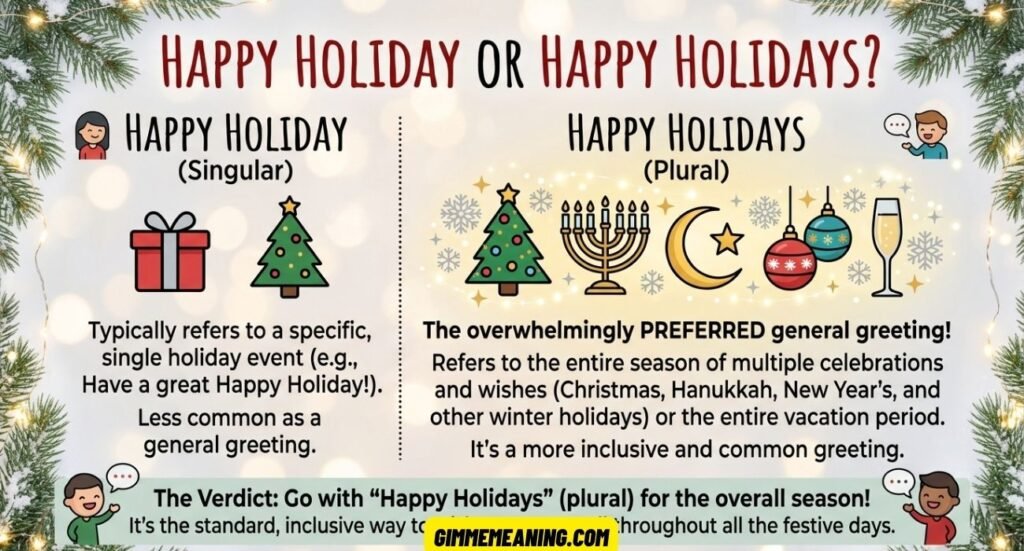
Modern holiday greetings are influenced by the need for cultural sensitivity in language. As workplaces and communities become more diverse, choosing the right words becomes more important than ever.
Using seasonal greetings and festive wishes that are inclusive helps create a positive environment. It shows awareness of different traditions and supports respectful communication across cultures, which is essential in today’s global society.
See Also : Is It Correct to Say “You Are Always Welcomed?”
Professional Holiday Greetings Examples and Best Practices
Looking at professional holiday greetings examples can help you understand how to use the right tone. Many organizations include phrases like “Happy Holidays” in their emails and cards to maintain a friendly yet respectful message.
Following good holiday greeting etiquette ensures your communication feels polished and thoughtful. Whether you are writing holiday season messages or updating your email holiday signature, choosing inclusive and clear language makes a lasting impression.
FAQs
Should you say happy holidays or happy holidays?
You should say “Happy Holidays” because it is the correct and commonly used phrase.
It sounds natural, inclusive, and works in both personal and professional settings.
What is the correct grammar for happy holidays?
The correct form is “Happy Holidays” with both words capitalized as a greeting.
It uses the plural form to refer to multiple celebrations in the season.
Is holiday plural or singular?
“Holiday” is singular and refers to one specific day or event.
“Holidays” is plural and refers to multiple celebrations or a festive period.
Do British say happy holidays?
In the UK, “Happy Holidays” is not commonly used as a festive greeting.
People usually say “Happy Christmas,” and “holiday” often means vacation.
Conclusion
The choice between Happy Holiday or Happy Holidays is simple when you understand the meaning. The singular form talks about one special day. The plural form covers many celebrations in one season. In the United States, people use “Happy Holidays” more often. This phrase sounds warm and complete. It also fits well in schools, offices, and public messages. Clear language helps people feel respected and included.
Writers and speakers should use words with care and purpose. The phrase Happy Holiday or Happy Holidays shows how small grammar choices can change meaning. The plural form works best for most situations because it includes everyone. It also supports clear and polite communication. Simple and correct greetings make messages stronger and more meaningful for all readers.